




Practice Management
Latest News

Advertisement
Medical Economics Insider: Save your practice
Check out our inaugural edition of our interactive publication, featuring in-depth reporting, expert insights, exclusive data, and more!

Latest Videos


Shorts
1:01
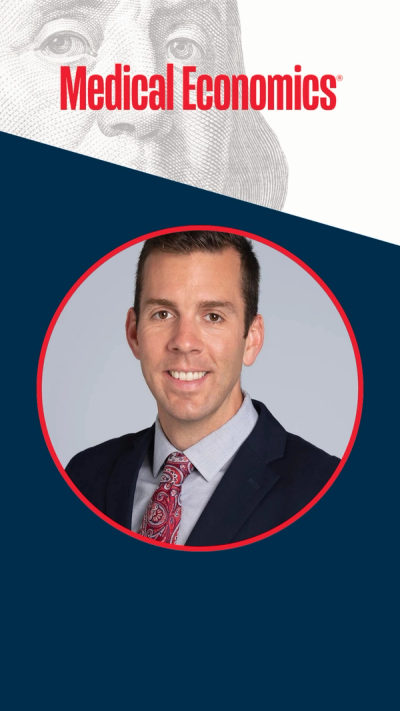
Staff training requirements for rapid testing
a day ago
by
Daniel Krajcik, D.O., MBA
1:02
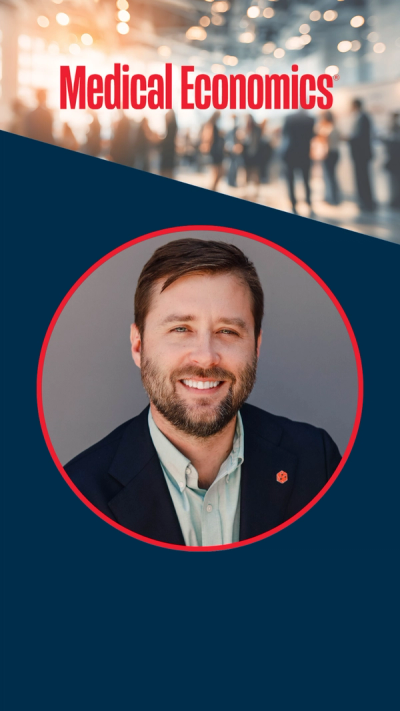
Why medical schools fail at financial literacy
4 days ago
by
Michael Jerkins, M.D., M.Ed.

0:52
Why presence is the most powerful tool in medicine
5 days ago
by
Melissa Lucarelli, M.D., FAAFP(+1 more)
0:38
How rapid testing can retain patients
8 days ago
by
Daniel Krajcik, D.O., MBA
1:14
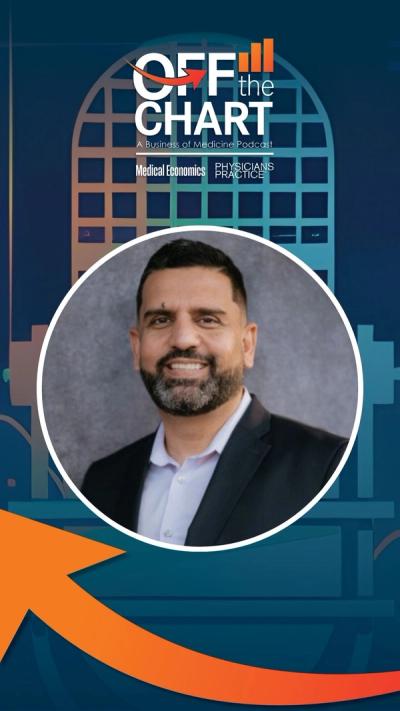
Why practices struggle to grow
12 days ago
by
Rihan Javid, D.O., J.D.
0:37
How to calculate rapid test costs
15 days ago
by
Daniel Krajcik, D.O., MBA
0:58
Morphic Medical's unique approach to obesity treatment
15 days ago
by
Mike Gutteridge
1:19
Making patients choose you
16 days ago
by
Carl White
0:17
Attracting patients: Why good medicine isn't enough
18 days ago
by
Carl White

1:09
Why physicians need to be on social media
19 days ago
by
Colleen Denny, M.D., FACOG
Podcasts










CME Content


Advertisement
More News

Patients are paying more for health care. But what does that mean for your practice?

Physicians should learn to set boundaries to combat burnout and ensure quality care amid ongoing workforce shortages, fostering a healthier health care environment.

Because medical schools, hospitals, and other health care facilities don’t view leadership as a core competency for physicians and don’t train to that competency, costs are felt throughout the health care system

A conversation with Sarah Matt, M.D., author of “The Borderless Healthcare Revolution.”

A majority of states and Washington, D.C., are following pediatric groups and/or prior or state recommendations instead of new federal childhood vaccine guidance.

Visibility, listening and time with patients matter more than any single perk.
Physicians want artificial intelligence to buy back time, not squeeze in more volume.

Psychiatrist and Edge co-founder, Rihan Javid, D.O., J.D., explains how rising wages, turnover and labor competition are reshaping physician practices — and why flexibility is becoming essential.
Acknowledgment, clarity and smart trade-offs matter more than quick fixes.

FTC hears from physicians, other professionals about restrictions when workers leave or change jobs.
Economic anxiety is real — but connection determines who stays grounded.

Medical groups say stepped-up operations by federal agents are stoking fear, keeping patients from hospitals and raising safety concerns for clinicians.
Economic uncertainty matters, but engagement is the real retention lever.

Every January brings not only a new calendar year, but also an influx of administrative work ushered in by annual benefit resets, renewed prior authorizations, formulary shifts and coverage reverification requirements.
Token surveys and late-stage consultation undermine trust and lead to worse decisions.
Physicians want input. The problem isn’t apathy — it’s whether leaders are listening and acting.

Medical Economics sat down with Bill Heller, chief operating officer at CHG Healthcare, to discuss the company’s latest survey on why satisfaction alone isn’t enough to retain physicians.
A negative Net Promoter Score doesn’t just reflect morale — it flags loyalty risk physicians can’t ignore.

Progressive Policy Institute finds hospital and corporate ownership of practices climbed to 59% by 2023, whereas independent practices declined fastest in rural communities, and prices rose following acquisitions.

What can a small practice do to stand out? Practice marketing experts interviewed by Medical Economics pointed to practical strategies that physicians can incorporate to rise above the crowd.
Physicians trust their direct supervisors far more than executive leadership. Bill Heller explains how visibility and proximity shape credibility.

Medical billing software sits at the center of the modern revenue cycle, but the sticker price rarely reflects what practices actually pay.
Highly engaged physicians are far more likely to trust leadership — and Bill Heller says transparency and follow-through matter more than grand strategy.

There are clear, actionable opportunities for employers to re-engage their physician workforce in ways that are both meaningful and measurable.
CHG Healthcare’s latest survey shows most physicians say they’re satisfied at work, but very few feel truly engaged — a gap that carries real retention risk for practices.
Advertisement
Advertisement
Trending on Medical Economics
1
‘Ghost’ physicians in Medicaid: Nearly 1 in 3 see no Medicaid patients
2
Investing in the nuclear power renaissance
3
Affordable drug advocates claim victory over pharmacy benefit managers in budget bill
4
Can virtual care be better than in-person care?
5