






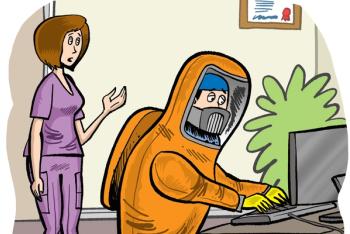
Don’t take those malware warnings literally, as our latest Funny Bone cartoon points out.
Don’t take those malware warnings literally, as our latest Funny Bone cartoon points out.

Looking to get the most from your online portal? Here are seven key features of the technology to better engage with patients.

Three simple steps for physicians to reduce the time they spend using the EHR.
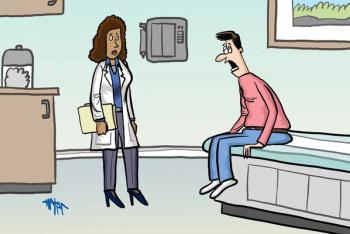
One patient’s quest for his medical record leads to a critical question for his physician.

When a security breach occurs, reporting it is essential. But what happens when that breach occurs within your business partner’s system rather than your own?
Fend off hackers with a thorough cyberdefense plan

Three precautions to more effectively protect your practice from potential cyberattacks

Experts say rather than a simple rebranding of current programs, CMS is refocusing on the true purpose of EHR use by hospitals and physicians.

Is your specialty in-demand or in decline?

Emails luring physicians and staff into installing malware on their computers continues to spread. Here’s how to protect yourself and your patients.

With a little planning and forethought, EHRs can actually improve doctor-patient communication and cause both parties to see them as a valuable tool for improving care.

Healthcare is not returning to paper, so rather than complain about the digital obstacles in their way, physicians should put that energy into meaningful change.
It's ironic: Experts in health IT concur that a major reason for healthcare systems shifted from paper to digital records was to reduce medical errors, but at the same time research has shown that EHRs actually introduce new kinds of errors.
A recent Mayo Clinic study on physician satisfaction with their EHRs showed that only 36 percent of 6,375 physicians interviewed were satisfied with their use.
For drugs or medical devices to be approved, there must be evidence that benefit significantly outweighs risk. This is to protect the public. A glaring exception is today's EHRs, which were mandated by the 2009 HITECH Act.
Industry insiders share their views of how healthcare is moving steadily toward a connected future.
Time spent on EHR data entry instead of interacting with patients is a common complaint from doctors.
In this podcast, Dr. Forrest highlights the failures he has experienced over the years since starting a DPC practice, and explains how other physicians can learn from his mistakes.
CMS announces a commitment to give patients control of their records.
Forecasts of future trends go along with a new year as reliably as champagne and the ball drop. Medical Economics spoke with three leading health information technology (HIT) experts to see what HIT trends they expect will matter the most in 2018. Here are the trends they foresee.
There is little argument that the EHR, and especially meaningful use of the EHR, are the main drivers of physician burnout and decreased productivity.
Keeping in mind that the core mandate of value-based care is shifting accountability to providers for the holistic quality and cost of the care they deliver, five shortcomings of legacy EHRs become apparent.
With electronic health records (EHRs) proving to be incompatible and interoperability still a long way off, some have suggested that moving ownership of patient records to the patient via a cloud-based portal or other universally accessible system might be the answer.
Many doctors uncomfortable with using the technology are exiting the biz